Environmental and Recycling Consulting
Helping sustainability-minded companies find solutions for their by-products that would otherwise end up in the landfill.
Who We Are
Carbonfree OÜ is a globally connected team of sustainability consultants specialising in industry by-products. We help our clients find sustainable recycling solutions and customers for their by-products, such as ashes, sawdust, salt, straw, concrete, slags, or otherwise unsellable products.
Our consulting services cover waste disposal, recovery, recycling, reuse, collection, minimisation, storage, transfer, and treatment.
We have over a decade of experience, focused solely on helping sustainability-minded companies find solutions for their by-products that would otherwise end up in the landfill.
We work with a wide range of local, national, and international clients, including communities, municipalities, waste associations, waste producers, the waste management industry, its regulators, and investors.
Our group of experts and partners has experience in providing practical advice on all waste types, including municipal, household, commercial, industrial, hazardous, agricultural, and mining waste.

Our Services
Environmental & Recycling Consulting
Integrated Waste Management Consultation for individuals and institutional organisations. We cover all waste types including municipal, household, commercial, industrial, hazardous, agricultural, and mining waste.
3D Powder Manufacturing and Mineral Concentration Equipment Sales
We provide unique services for 3D powder printing and the manufacturing of metal products, including magnets. Special equipment for mineral concentration and recycling purposes.
CCUS - Carbon Capture, Utilization and Storage
CCUS is key to reaching Carbon Free manufacturing (net zero). Carbonfree OÜ is answering the growing demand for CCUS solutions by consulting clients of Carbon Capture projects across all industries.
Circular Economy
The circular economy is based on three principles:

Preserve and Enhance Natural Capital
By controlling finite stocks and balancing renewable resource flows.
Optimize Resource Yields
By circulating products, components, and materials at the highest utility at all times in both technical and biological cycles.
Foster System Effectiveness
By revealing and designing out negative externalities.
Carbonfree visualizes the circular economy through material loops and interconnections.
Bottom Ash Treatment with Cutting-Edge Technology
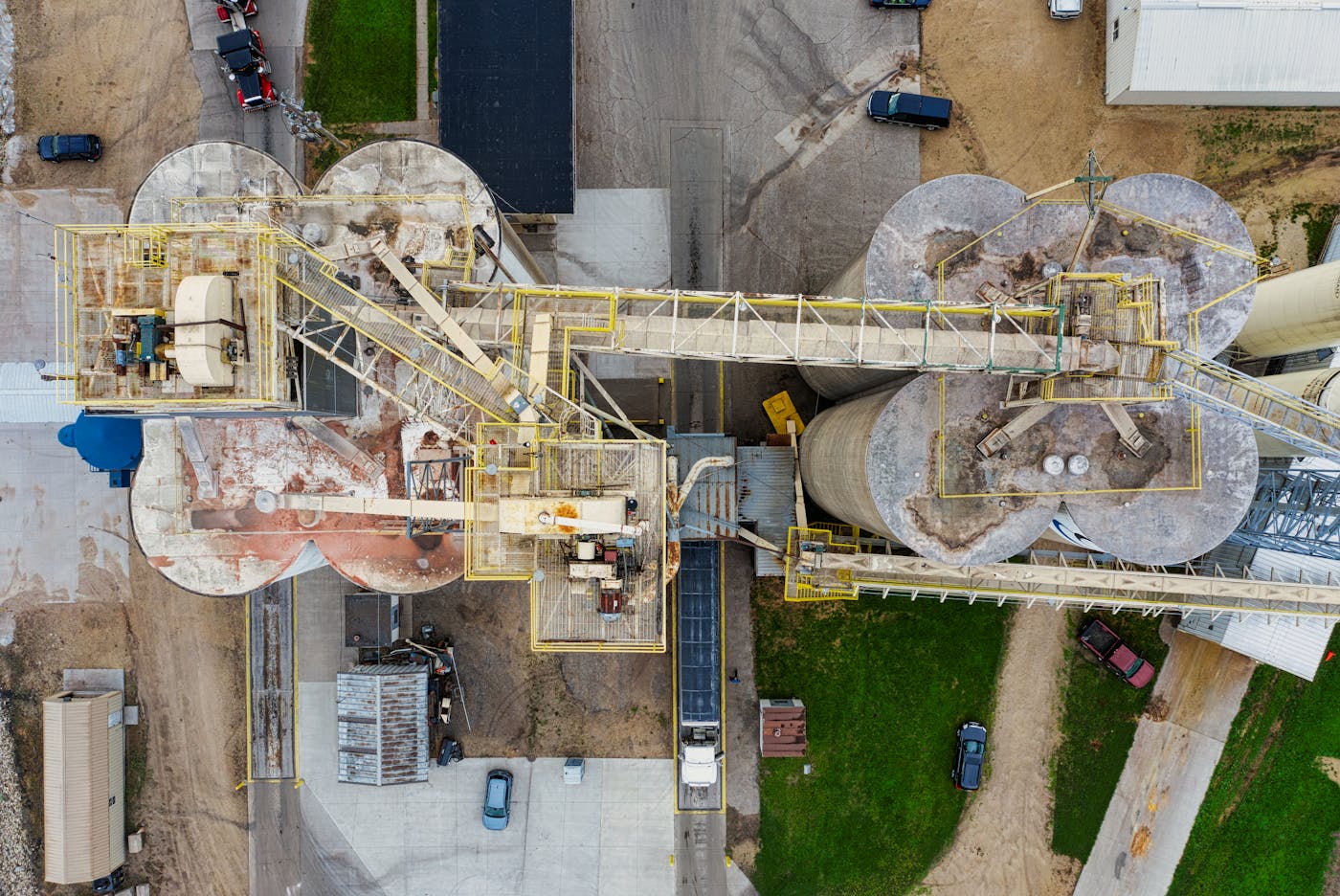
Municipal solid waste is burned in incinerator Waste-to-Energy (WtE) plants. Bottom ash is the material left on the grate after municipal solid waste is incinerated. This material consists of, for example, glass, metals, ceramics, stone, brick, concrete, ash, and melting products, and it resembles natural sand and gravel.
In 2018, the EU generated approximately 19 million tonnes of incinerator bottom ash (IBA) from municipal solid waste, which accounts for about 20% of the total incinerated waste. This residue, which is generally classified as non-hazardous, is either recycled into construction materials after metal recovery or disposed of in landfills. The lack of a uniform EU regulation for IBA utilisation results in different management approaches across member states.
Generation & Composition
- Quantity
- In 2018, the EU produced approximately 19 million tonnes of IBA from waste-to-energy plants
- Composition
- Primarily inorganic materials like glass, ceramics, and aggregates, but also contains valuable metals
- Minerals
- 80-85%
- Metals
- 10-12%, including ferrous metals and non-ferrous metals like aluminium
Management & Utilisation
- Metal Recovery
- Ferrous and non-ferrous metals are extracted and recycled, contributing to GHG savings and providing materials for industries like automotive manufacturing
- Mineral Utilisation
- The remaining mineral fraction is often used as a secondary aggregate in construction for applications such as road construction and earthworks after undergoing a treatment process called natural ageing or carbonation
- Disposal
- In countries with less developed recycling infrastructure or where material quality isn't suitable for use, the ash is still landfilled
The Carbonfree Solution
For a long time, bottom ashes have been treated only coarsely for metal removal. Then the leftover has been used, for example, in landfill site structures, even though it has other, more valuable uses.
Carbonfree cutting-edge technology doubles the value of recovered metals from IBA. Unique oxide-level separation technology down to 10-20µm offers unforeseen IBA and slag treatment, separating harmful metal oxides into their own product group for re-use in the steel industry.
After metal oxide reduction, the remaining IBA and slags contain similar elements to those of cement and can be used as cement substitutes or, in some cases, as fertilizers.
This carbon-free minerals treatment technology saves natural resources, leaves ZERO Waste, and generates economic benefits to society that are multiple times higher than traditional IBA treatment.

Get in Touch
If you are interested in Integrated Waste Management Consultation as an individual or an institutional organisation, please contact us!